A bioresonance scan does not photograph organs. It asks every system a simpler question, "how are you coping?", and records who answers under strain.
What happens during a scan
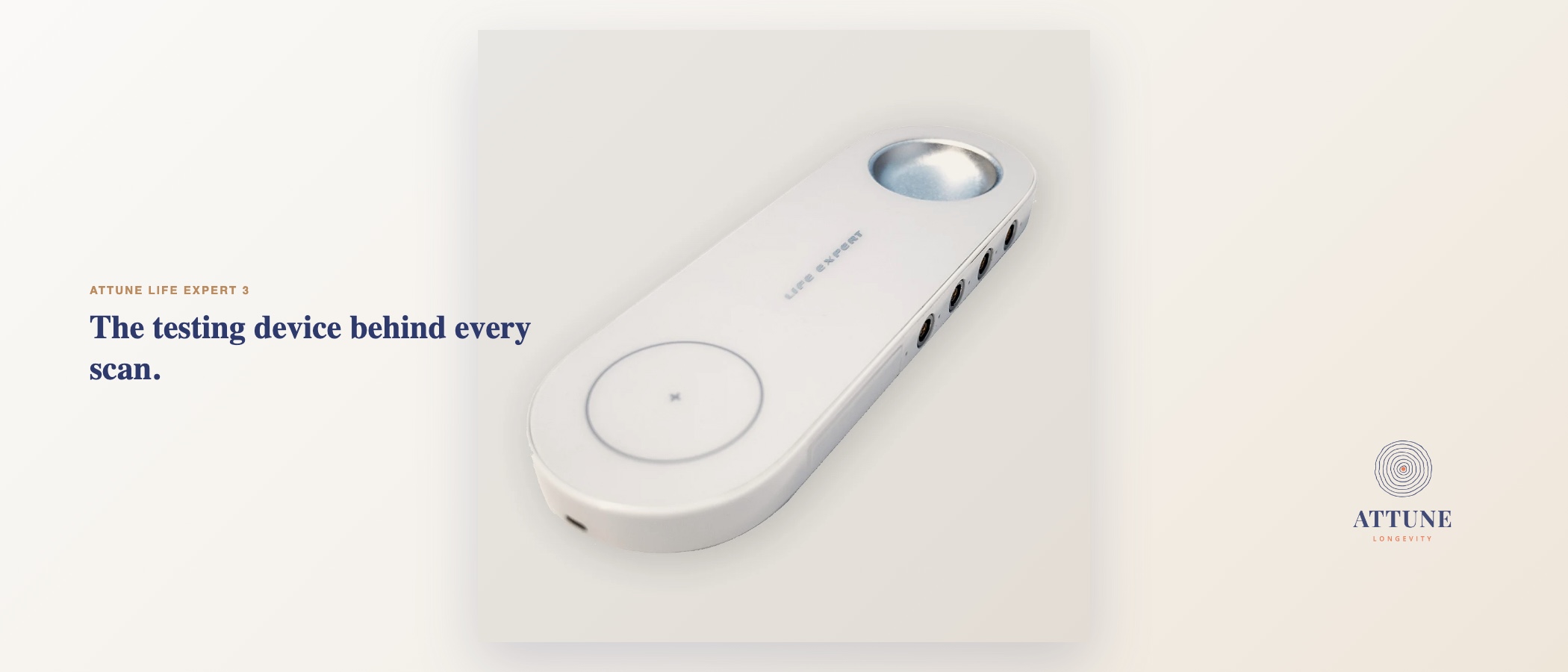
A testing device makes contact through electrodes, clipped on at the wrists and ankles with a contact on the head. It then measures how tissues respond across a range of frequencies. Well-functioning tissue tends to respond within a familiar band; systems under load drift outside it. The software maps those drifts into a readable report, modern devices such as the Life Expert 3 complete a whole-body session in minutes.
The software behind the scan is a cloud system with a neural network trained on scans run worldwide, reading against a database of roughly 35,000 testing markers. Doctors and practitioners who have used the system for years report 95 to 98% scan accuracy, and it improves in two ways: as more people are scanned, and as the same person is scanned repeatedly, because the system learns that person's baseline. That is one more reason a consistent rhythm matters more than any single reading.
What the results are for
Three legitimate uses stand out:
- Pattern spotting: identifying which systems show stress patterns worth supporting, the starting point for choosing frequency programs.
- Tracking over time: the single most valuable habit. A consistent scan rhythm (same time of day, similar conditions) turns individual readings into a trend, and trends are what motivate people to keep going.
- Program building: results feed directly into the WebWellness web clinic, where supportive program complexes are assembled and loaded onto a therapy device.
What the results are not
A scan is not a medical diagnosis, and a stressed reading is not a disease label. It is a prompt for terrain support, and, when real symptoms exist, a reminder that a doctor comes first. Keeping this boundary sharp is what makes the tool useful rather than misleading.
Getting a clean reading
Preparation is simple but matters: normal hydration, no coffee or strong tea right before, all metal off, a couple of quiet minutes before starting. The scan preparation guide covers the full checklist.