Blog · Is Bioresonance Testing Safe for Kids? What Pare…
Parents ask this before every family session, and they should: what actually happens to my child, and is it safe? Here is the specific answer, not a reassurance slogan.
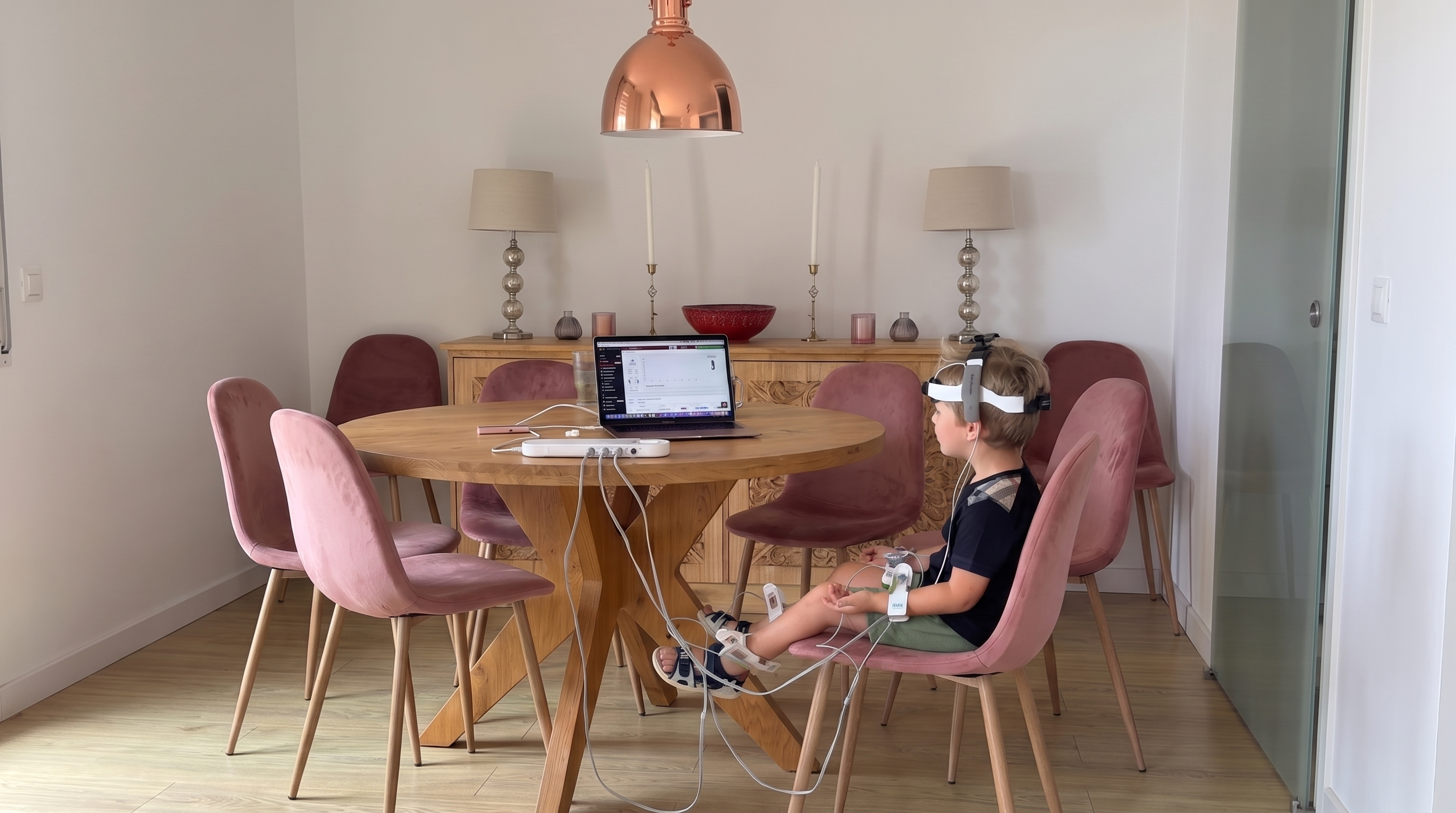
A Life Expert testing session uses clip electrodes at the wrists and ankles and a contact band on the head, resting against the skin. There are no needles, no injections, and no radiation involved. The device reads through the skin with a very small measuring current, far below anything you can feel, which is also why the manufacturer lists intolerance to electric current as a contraindication.
"Non-invasive" is a specific, checkable claim, not a marketing word: nothing breaks the skin, nothing is injected, absorbed or ingested, and the device does not use ionising radiation of any kind. A testing session is passive measurement, comparable in physical intervention to weighing a child or taking their temperature with a skin-contact thermometer, just reading more detailed information.
A whole-body scan takes a few minutes. The child sits, the electrodes are clipped on at the wrists and ankles with a contact on the head, and they hold reasonably still while the device reads. Most people feel nothing during the reading itself. Most children find the wires and the small screen more curious than uncomfortable. Sessions can be paused or stopped at any point, there is no reason to push through if a child is unsettled.
A parent or guardian, always, both to reassure the child and to make the judgement call on whether the moment is right. Some children are curious and settle immediately; others need a first session to just be a demonstration on a parent's hand before their own turn. There is no fixed "right age", the read on temperament matters more than a number.
Reading the body's electrical signals is not exotic technology. Hospitals do it every day: an ECG reads the electrical activity of the heart, an EEG the brain's. Bioresonance testing reads a different, far weaker signal for a different purpose: a wellness snapshot of how the body is coping, not a diagnosis. And if a child ever has real symptoms, the paediatrician always comes first, exactly as with any wellness tool.
The manufacturer lists these contraindications for its devices: individual intolerance to electric current, pregnancy, an implanted pacemaker, acute disorders of cerebral or coronary circulation, and acute psychiatric agitation. Read them, and ask your paediatrician if anything about your child makes you unsure.
Contact-only, no needles, no radiation, stoppable at any moment, and with the manufacturer's contraindications in writing. That is why parents feel comfortable testing their children, and why a scan so easily becomes a normal family habit, like checking temperature, just wider.
Your next step
See how the Life Expert 3 works, and how to prepare a first scan so the reading is clean.
See the Life Expert 3 How to prepare for a scanNot medical advice · wellness technology, not a diagnosis
Before you go
47 organs and systems, parasites, toxins, biological age, and more. The real report a Life Expert 3 produces, sent straight to your inbox.